Experiences of homelessness, eye and ear health and access to care
03.11.2026
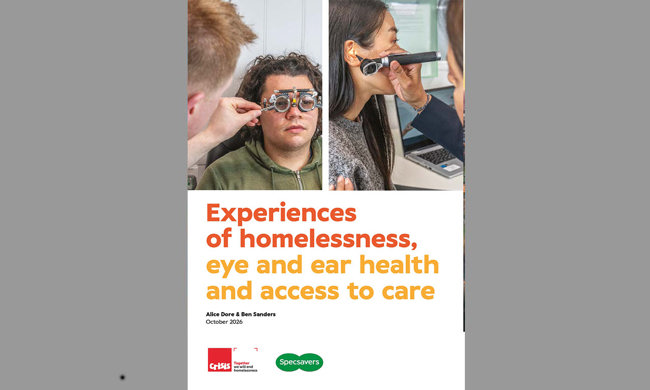
Homelessness is a cause of poor health and is associated with substantial barriers to healthcare Additionally, health conditions can present challenges to moving out of homelessness and into secure housing. This research, from Crisis and Specsavers, attempts to address an evidence gap regarding how this applies to eye and ear health specifically. To address these research questions, mixed-methods research was conducted, comprising 1) a ‘Homelessness and Health Survey’ of people with experience of homelessness, 2) a wider ‘Housing Insecurity and Health Survey’ of low-income renters, 3) in-depth interviews with five people with experience of homelessness and sight or hearing difficulties.
Key findings
- The Homelessness and Health Survey made clear the damaging effects of homelessness on eye and ear health and highlighted the impact of these conditions on people experiencing homelessness, particularly people sleeping rough. Close to half (47%) of those with experience of homelessness and sight and hearing difficulties said that these issues had worsened during their experience of homelessness, while one in five (21%) said they did not have sight or hearing issues before they experienced homelessness.
- More than a third of people with experience of homelessness and sight and hearing difficulties felt that these conditions caused difficulty with day-to day tasks (37%), reduced confidence (35%), feeling more at risk of accidents (35%) and lower quality of life (34%). People who were sleeping rough with sight or hearing difficulties felt these impacts more acutely – half (50%) said that they felt more at risk of accidents due to their vision/hearing, while a third (33%) felt more at risk of violence or exploitation as a result.
- Sight and hearing difficulties made it more difficult for people in potentially precarious housing situations to maintain their income and housing: the Housing Insecurity and Health Survey showed that around a third of low-income renters with eye or care health issues said that poor eyesight or hearing made it more difficult for them to find employment (35%), maintain employment (35%), find somewhere to live (32%), maintain their housing (31%) and access housing advice and support (36%).
- In both surveys, many participants had not accessed an eye or hearing check for several years, if ever – this was more marked for people with experience of homelessness and particularly for those who were sleeping rough.
- Cost was a clear barrier to people with experience of homelessness and low-income renters accessing eye and ear care, as were competing priorities/a lack of time or capacity to arrange an eye or hearing check and limitations around transport and accessibility of location.
- Despite the barriers to eye and ear healthcare among those experiencing homelessness or in precarious housing situations, the research indicated positive experiences when these services were accessed.
Reference
Dore, A. and Sanders, B (2026), Experiences of homelessness, eye and ear health and access to care. Crisis and Specsavers.
Related content

Understanding homeless health inequality in Birmingham (2021)
#HealthNow peer research report: Understanding homeless health inequality in Birmingham (2021) Be...
View more